23 Jul 2026
Children & Teenagers
Headaches in Children: What Causes Them and What You Can Do
If your child comes home from school with a headache more than once a week, you're probably already worried, and you're not alone as it's one of the most common concerns we hear from Pukekohe and Franklin families. You've likely tried more water, earlier bedtimes and less screen time, and while that sometimes helps, often it doesn't.
For many parents, the most worrying part isn't the headache itself, it's not knowing why their child keeps getting them. As a trusted chiropractic practice in Pukekohe, here's what we often see in our practice, along with what current research suggests about why they occur.
How Common Are Headaches in Children?
Research shows that recurrent headaches affect many school-age children, and those who experience them frequently tend to carry higher levels of stress and anxiety as a result. What's particularly important, is that regular headaches in childhood are associated with a higher likelihood of ongoing headache patterns into adulthood. They are not always something children simply "grow out of," which is why early attention can make a real difference.
Here at Living Family Chiropractic in Pukekohe, we see children who have been having headaches so frequently that the family has started to accept them as normal. Often a parent brings their child in for something else entirely, and it's only during the consultation that we discover the headaches have been going on for months.
What Causes Headaches in Children?
There's rarely a single cause. More often, it's a combination of contributing factors.
At Living Family Chiropractic, we often talk about the 4Ts: Trauma, Technology, Thoughts, and Toxins. You might have spotted them on the posters around our walls. It's a framework for understanding the different stressors that can affect a child's body and nervous system. When these begin to build up, it becomes harder for the body to adapt, and for some children this may show up as recurring headaches.
Common contributing factors include:
Poor posture and tech neck, from long stretches on screens and devices that strain the neck and upper spine.
Spinal and nervous system dysfunction, when the joints, muscles and nerves of the neck and upper spine are not working as well as they could and altered sensory input may feed into headaches.
Dehydration and poor nutrition, from not drinking enough water, skipping meals or relying on highly processed foods.
Sleep disruption, where irregular or inadequate sleep affects the brain's ability to regulate pain and recover from the day.
Emotional stress and anxiety, school pressures, social challenges, and changes at home all influence the nervous system.
Sports impacts and playground falls, since even minor knocks, tumbles or collisions can affect the head, neck, and spine.
The Spine and Nervous System Connection
Your child's brain relies on a constant stream of accurate information from the body to understand what's happening, both inside and out. The joints, muscles and tissues of the neck are rich in spinal nerves that continually send information to the brain about movement, posture, and position.
When the neck and upper spine are not moving or functioning as well as they should, chiropractors refer to this as a vertebral subluxation, and the quality of these signals may be altered. Research suggests these changes can influence the way the brain processes sensory information and pain.
Some clinical research has followed children aged 7 to 14 with frequent headaches and found that those receiving chiropractic care reported fewer headaches over time than a comparison group, with a meaningful proportion noting improvement. Wider reviews of clinical trials also suggest spinal care may help some people, including children, who live with recurrent headaches and migraines.
Because the neck plays such an important role in the nervous system's communication with the brain, altered input from this region may be one factor associated with recurring headaches in some children.
Chiropractic care aims to improve the movement and function of the spine through gentle, specific adjustments. By restoring more accurate sensory input from the spine, these adjustments may help support healthy communication between the body and the brain, allowing the nervous system to regulate and respond more effectively.
While most childhood headaches are not serious, persistent or worsening headaches should always be properly assessed. If we believe further investigation or referral is needed, we'll help point you in the right direction. If your child's headaches seem more migraine-like in nature, our Headaches & Migraines page covers this in more detail).
What Does Chiropractic Care for a Child With Headaches Look Like?
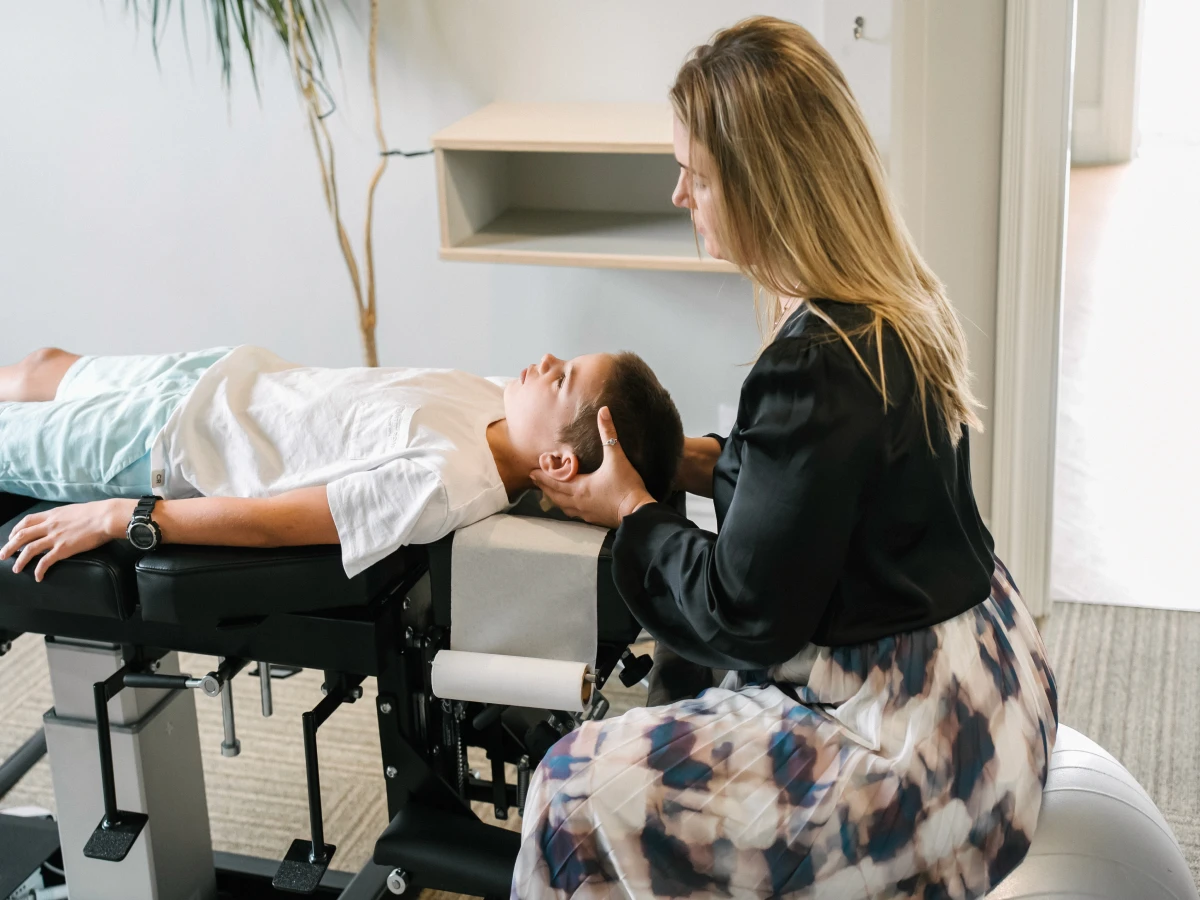
Our care is tailored to each child and may include spinal adjustments and cranial-based techniques such as Sacro Occipital Technique (SOT). These are very gentle, low-force approaches that focus on how the spine, skull and nervous system are working together.
Most parents are surprised by how gentle care feels. Helping children feel comfortable and relaxed throughout their visit matters to us. Many make a beeline for the deck play area, and there's a good chance they'll remind our receptionist about their sticker on the way out.
Alongside hands-on care, we look at the everyday factors that shape a child's nervous system: sleep, posture, screen use, hydration, stress and activity. The focus isn't only on symptoms, but on supporting better overall function, adaptability and long-term wellbeing. You can read more about our broader approach to children and teenagers on our Children & Teenagers page.
When Should You Bring Your Child In?
If your child gets headaches regularly, relies on medication to get through the week, or finds that headaches are affecting school, sport, sleep, concentration or mood, it's worth having them assessed. The earlier we identify any underlying factors, the better the outcome tends to be.
Headaches are not something children should simply have to put up with. In many cases, with the right support, they don't have to.
If you're in Pukekohe or the Franklin region and would like your child assessed, we'd love to help. Book a visit with our team at Living Family Chiropractic.
Email: info@livingchiro.co.nz
Book your first visit: https://livingchiro.bookings.pracsuite.com/guest
Frequently Asked Questions
At what age can a child see a chiropractor for headaches?
Children of all ages can be assessed, from newborns through to teenagers. Care is always tailored to the child's age, size and individual needs, using gentle, low-force techniques.
Is chiropractic care safe for children with headaches?
Chiropractic care for children uses very gentle, low-force techniques suited to a developing body. As with any healthcare approach, persistent or worsening symptoms should always be properly assessed by an appropriate practitioner.
How do I know if my child's headaches need attention?
If headaches are occurring more than once a week, affecting school or sleep, or your child is relying on medication regularly, it's worth booking an assessment.
Does chiropractic care replace seeing a doctor?
No. Our team works alongside your child's GP and other healthcare providers, and will always refer on for further investigation if needed.
This article draws on peer-reviewed research, including:
1. Haavik H, Murphy B. The role of spinal manipulation in addressing sensorimotor integration and brain function. J Electromyogr Kinesiol 2012;22(5):768-76.
2. Bryans R, Descarreaux M, Duranleau M, et al. Evidence-based guidelines for the chiropractic treatment of adults with headache. J Manipulative Physiol Ther 2011;34(5):274-89.
3. Todd AJ, Carroll MT, Robinson A, et al. Adverse events due to chiropractic and other manual therapies for infants and children: a review of the literature. J Manipulative Physiol Ther 2015;38:699-712.
If your child comes home from school with a headache more than once a week, you're probably already worried, and you're not alone as it's one of the most common concerns we hear from Pukekohe and Franklin families. You've likely tried more water, earlier bedtimes and less screen time, and while that sometimes helps, often it doesn't.
For many parents, the most worrying part isn't the headache itself, it's not knowing why their child keeps getting them. As a trusted chiropractic practice in Pukekohe, here's what we often see in our practice, along with what current research suggests about why they occur.
How Common Are Headaches in Children?
Research shows that recurrent headaches affect many school-age children, and those who experience them frequently tend to carry higher levels of stress and anxiety as a result. What's particularly important, is that regular headaches in childhood are associated with a higher likelihood of ongoing headache patterns into adulthood. They are not always something children simply "grow out of," which is why early attention can make a real difference.
Here at Living Family Chiropractic in Pukekohe, we see children who have been having headaches so frequently that the family has started to accept them as normal. Often a parent brings their child in for something else entirely, and it's only during the consultation that we discover the headaches have been going on for months.
What Causes Headaches in Children?
There's rarely a single cause. More often, it's a combination of contributing factors.
At Living Family Chiropractic, we often talk about the 4Ts: Trauma, Technology, Thoughts, and Toxins. You might have spotted them on the posters around our walls. It's a framework for understanding the different stressors that can affect a child's body and nervous system. When these begin to build up, it becomes harder for the body to adapt, and for some children this may show up as recurring headaches.
Common contributing factors include:
Poor posture and tech neck, from long stretches on screens and devices that strain the neck and upper spine.
Spinal and nervous system dysfunction, when the joints, muscles and nerves of the neck and upper spine are not working as well as they could and altered sensory input may feed into headaches.
Dehydration and poor nutrition, from not drinking enough water, skipping meals or relying on highly processed foods.
Sleep disruption, where irregular or inadequate sleep affects the brain's ability to regulate pain and recover from the day.
Emotional stress and anxiety, school pressures, social challenges, and changes at home all influence the nervous system.
Sports impacts and playground falls, since even minor knocks, tumbles or collisions can affect the head, neck, and spine.
The Spine and Nervous System Connection
Your child's brain relies on a constant stream of accurate information from the body to understand what's happening, both inside and out. The joints, muscles and tissues of the neck are rich in spinal nerves that continually send information to the brain about movement, posture, and position.
When the neck and upper spine are not moving or functioning as well as they should, chiropractors refer to this as a vertebral subluxation, and the quality of these signals may be altered. Research suggests these changes can influence the way the brain processes sensory information and pain.
Some clinical research has followed children aged 7 to 14 with frequent headaches and found that those receiving chiropractic care reported fewer headaches over time than a comparison group, with a meaningful proportion noting improvement. Wider reviews of clinical trials also suggest spinal care may help some people, including children, who live with recurrent headaches and migraines.
Because the neck plays such an important role in the nervous system's communication with the brain, altered input from this region may be one factor associated with recurring headaches in some children.
Chiropractic care aims to improve the movement and function of the spine through gentle, specific adjustments. By restoring more accurate sensory input from the spine, these adjustments may help support healthy communication between the body and the brain, allowing the nervous system to regulate and respond more effectively.
While most childhood headaches are not serious, persistent or worsening headaches should always be properly assessed. If we believe further investigation or referral is needed, we'll help point you in the right direction. If your child's headaches seem more migraine-like in nature, our Headaches & Migraines page covers this in more detail).
What Does Chiropractic Care for a Child With Headaches Look Like?
Our care is tailored to each child and may include spinal adjustments and cranial-based techniques such as Sacro Occipital Technique (SOT). These are very gentle, low-force approaches that focus on how the spine, skull and nervous system are working together.
Most parents are surprised by how gentle care feels. Helping children feel comfortable and relaxed throughout their visit matters to us. Many make a beeline for the deck play area, and there's a good chance they'll remind our receptionist about their sticker on the way out.
Alongside hands-on care, we look at the everyday factors that shape a child's nervous system: sleep, posture, screen use, hydration, stress and activity. The focus isn't only on symptoms, but on supporting better overall function, adaptability and long-term wellbeing. You can read more about our broader approach to children and teenagers on our Children & Teenagers page.
When Should You Bring Your Child In?
If your child gets headaches regularly, relies on medication to get through the week, or finds that headaches are affecting school, sport, sleep, concentration or mood, it's worth having them assessed. The earlier we identify any underlying factors, the better the outcome tends to be.
Headaches are not something children should simply have to put up with. In many cases, with the right support, they don't have to.
If you're in Pukekohe or the Franklin region and would like your child assessed, we'd love to help. Book a visit with our team at Living Family Chiropractic.
Email: info@livingchiro.co.nz
Book your first visit: https://livingchiro.bookings.pracsuite.com/guest
Frequently Asked Questions
At what age can a child see a chiropractor for headaches?
Children of all ages can be assessed, from newborns through to teenagers. Care is always tailored to the child's age, size and individual needs, using gentle, low-force techniques.
Is chiropractic care safe for children with headaches?
Chiropractic care for children uses very gentle, low-force techniques suited to a developing body. As with any healthcare approach, persistent or worsening symptoms should always be properly assessed by an appropriate practitioner.
How do I know if my child's headaches need attention?
If headaches are occurring more than once a week, affecting school or sleep, or your child is relying on medication regularly, it's worth booking an assessment.
Does chiropractic care replace seeing a doctor?
No. Our team works alongside your child's GP and other healthcare providers, and will always refer on for further investigation if needed.
This article draws on peer-reviewed research, including:
1. Haavik H, Murphy B. The role of spinal manipulation in addressing sensorimotor integration and brain function. J Electromyogr Kinesiol 2012;22(5):768-76.
2. Bryans R, Descarreaux M, Duranleau M, et al. Evidence-based guidelines for the chiropractic treatment of adults with headache. J Manipulative Physiol Ther 2011;34(5):274-89.
3. Todd AJ, Carroll MT, Robinson A, et al. Adverse events due to chiropractic and other manual therapies for infants and children: a review of the literature. J Manipulative Physiol Ther 2015;38:699-712.
More Posts

Copyright © 2026 Living Family Chiropractic
Website by Made