26 Nov 2026
Elderly Care
Fall Prevention for Seniors in Pukekohe: How Chiropractic Care Supports Balance, Strength and Confidence

Most falls do not come out of nowhere. It might be a toe catching on the back step, an uneven footpath in town, or a light-headed moment getting up at night. For many older adults in Pukekohe and across the Franklin region, the hardest part is what comes after: walking more carefully, skipping the grandkids’ sport, or giving up time in the garden.
Falls are not simply part of getting older. At Living Family Chiropractic, we see balance as something that can be supported at any age. Here’s what research suggests about balance, why it changes with age and where chiropractic care fits in.
Balance is a nervous system skill
Staying upright feels automatic, but your brain relies on information from your eyes, inner ear, joints and muscles. Your sense of where your body is in space is called proprioception.
Balance also depends on reaction time. When your foot catches, your nervous system must respond quickly. With age, eyesight changes, joint signals become less precise, processing slows and leg strength declines. Together, these changes can increase the risk of falling.
Why do falls become more likely?
Research suggests at least one in three people over 65 falls each year, with the risk increasing with age. Usually, several factors contribute.
In our practice, we use a wellness framework called the 4Ts: Trauma (previous falls or stiffness), Technology (prolonged sitting), Thoughts (worry about falling) and Toxins (factors such as poor nutrition). These can affect overall wellbeing and confidence in movement.
Fear of falling is particularly important. After a fall or near miss, people often become more cautious. Moving less, however, means less balance practice and declining leg strength, creating a cycle that is easier to address early.
What the research shows
A New Zealand study led by Dr. Kelly Holt at the New Zealand College of Chiropractic followed 60 independently living adults over 65 for 12 weeks. Those receiving chiropractic care showed improvements in stepping reaction time, responding around a tenth of a second faster than a comparison group on a test associated with falls risk. They also showed improvements in ankle position sense and reported better physical quality of life. The study measured factors associated with falls, not falls themselves. Chiropractic care should therefore be considered part of a broader approach, not a stand-alone solution.
What does elderly chiropractic care look like at Living Family Chiropractic?
Your first visit begins with a thorough assessment. We discuss your health history, previous falls, medications, and what you want to keep doing, whether that's walking, confidently, gardening, or playing with your grandchildren.
We assess posture, spinal movement, balance and nervous system function, using non-invasive neurological scans where appropriate. X-rays are recommended when clinically necessary.
From there, we develop a personalised plan for elderly chiropractic care in Pukekohe.
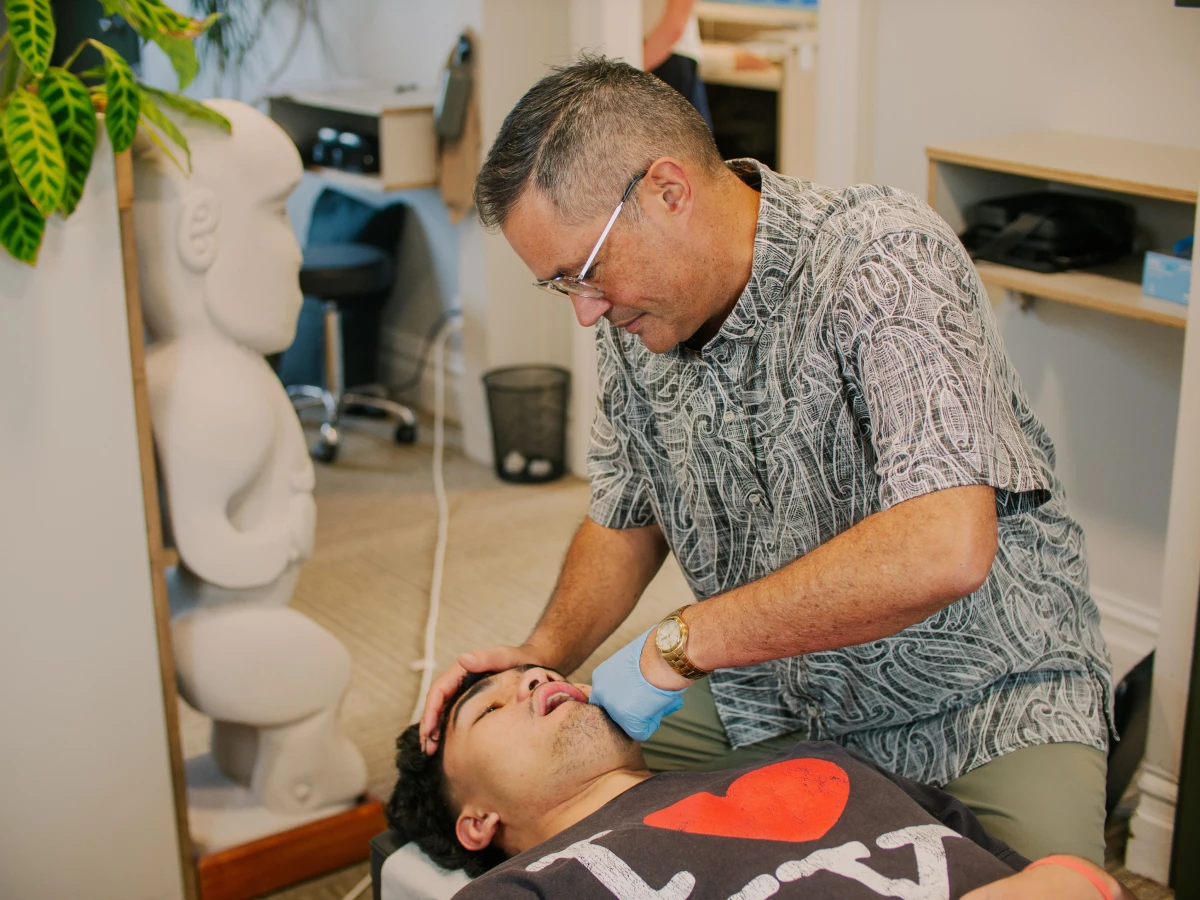
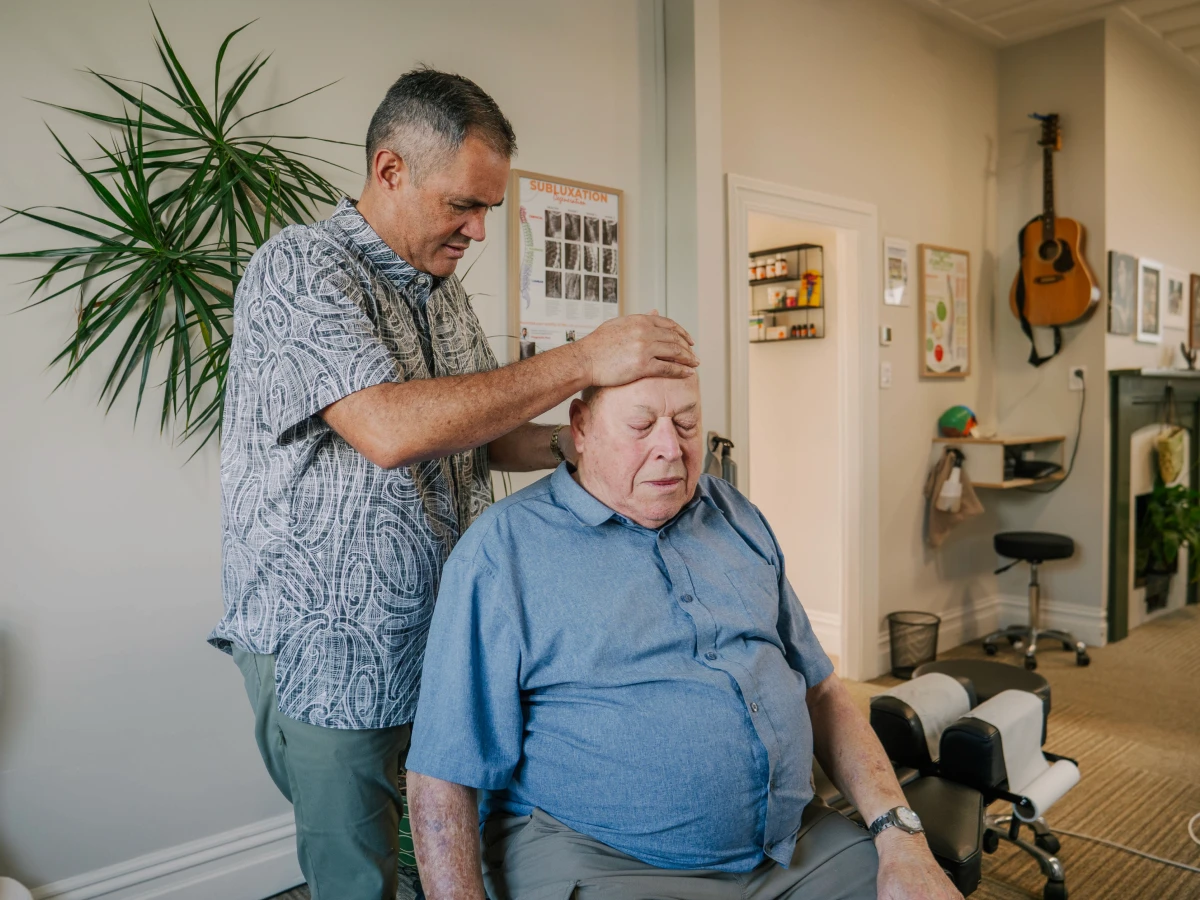
Treatment may include low-force instrument-assisted adjustments, or drop-table techniques, with particular consideration for reduced bone density. Our approach focuses on spinal movement and function, while recognising that balance depends on many factors.
Learn more on our Elderly Care page.
Health beyond the treatment table
Our Wellness Strategy focuses on the 5 Requirements of Life: how we eat, think, move, rest and care for our nervous system.
For fall prevention, movement is essential. We encourage working alongside your GP, physiotherapist, or exercise class. These practical steps can also help:
Join a strength and balance class.
Have regular eye checks and update your glasses when needed.
Ask your GP or pharmacist to review medications if you experience dizziness.
Improve lighting, remove loose rugs and consider bathroom rails.
Wear supportive, well-fitting shoes.
Sit briefly on the edge of your bed before standing.
When should you book an assessment?
If you have fallen, feel unsteady on uneven ground, rely on furniture for support or avoid activities you once enjoyed, consider having your balance and mobility assessed.
Family members often notice these changes first. If a parent or grandparent seems less steady, an assessment can be a practical first step for the whole whānau.
Falls do not have to be an accepted part of ageing. With appropriate support, maintaining confidence and independence is a realistic goal.
Book a visit
If you're in Pukekohe or the wider Franklin region and have concerns about balance or fall prevention, our team at Living Family Chiropractic can help you explore your options.
Email: info@livingchiro.co.nz
Book your first visit: https://livingchiro.bookings.pracsuite.com/guest
Frequently Asked Questions
Is chiropractic care safe for older adults?
Chiropractic care is considered low risk when provided by trained, registered practitioners using appropriate techniques. We begin with a health history and examination, and may consider low-force options for people with osteoporosis following individual assessment.
Can chiropractic care prevent falls?
Research suggests chiropractic care may improve certain factors associated with falls risk, but it has not been established that chiropractic care prevents falls. Strength and balance exercise, regular eye checks and a safe home remain important.
What should I do after a fall?
Seek urgent medical help if you hit your head, particularly if taking blood thinners, experience sudden dizziness or weakness, or cannot stand or bear weight. Call 111 in an emergency. For ongoing stiffness or unsteadiness, see your GP.
This article draws on peer-reviewed research, including:
Holt KR, Haavik H, Lee ACL, Murphy B, Elley CR. Effectiveness of chiropractic care to improve sensorimotor function associated with falls risk in older people: a randomized controlled trial. J Manipulative Physiol Ther 2016;39(4):267-278.
Sherrington C, Fairhall NJ, Wallbank GK, et al. Exercise for preventing falls in older people living in the community. Cochrane Database Syst Rev 2019;1.
More Posts

Copyright © 2026 Living Family Chiropractic
Website by Made